




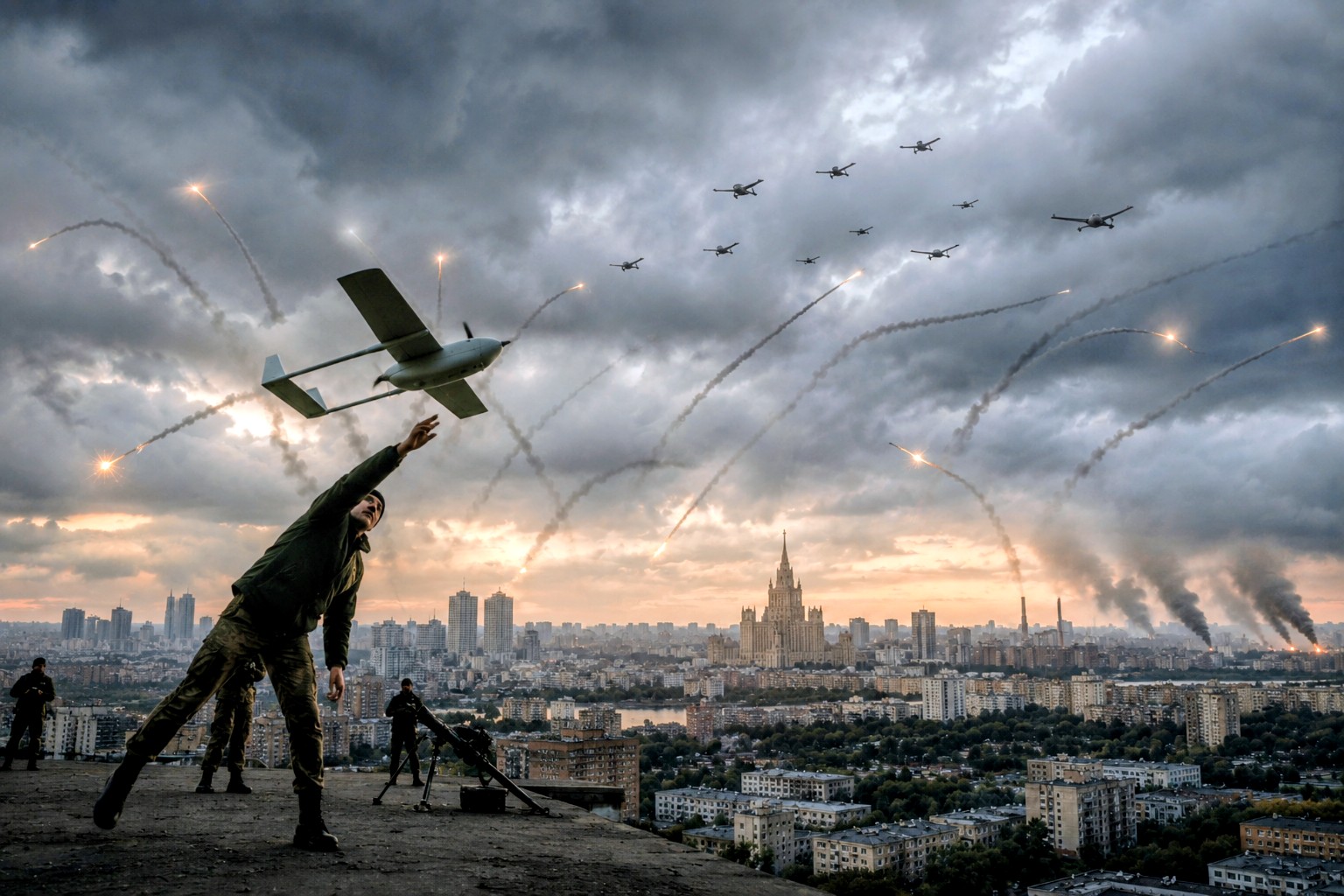
The issue is not simply that defense systems are weak. The real constraints come from physics and statistics.
Modern radars can detect large aircraft from hundreds of kilometers away. Small drones, however, produce much weaker radar reflections and often fly at low altitudes where trees, buildings and terrain interfere with detection. The curvature of the Earth also limits a radar’s line of sight.
Defense systems must also respond not to a single target, but to numerous drones arriving simultaneously from different directions. In such a situation, even if most are intercepted, it may be enough for only a few to reach their targets.
The attack on Moscow once again demonstrated that the advantage in modern warfare does not always belong to the most expensive technology. Relatively inexpensive and apparently simple systems can force defense networks worth millions of dollars into difficult choices.
The intelligent combination of physics, engineering and mathematical planning shows that even the strongest defenses are rarely completely impenetrable.
Leave a Reply